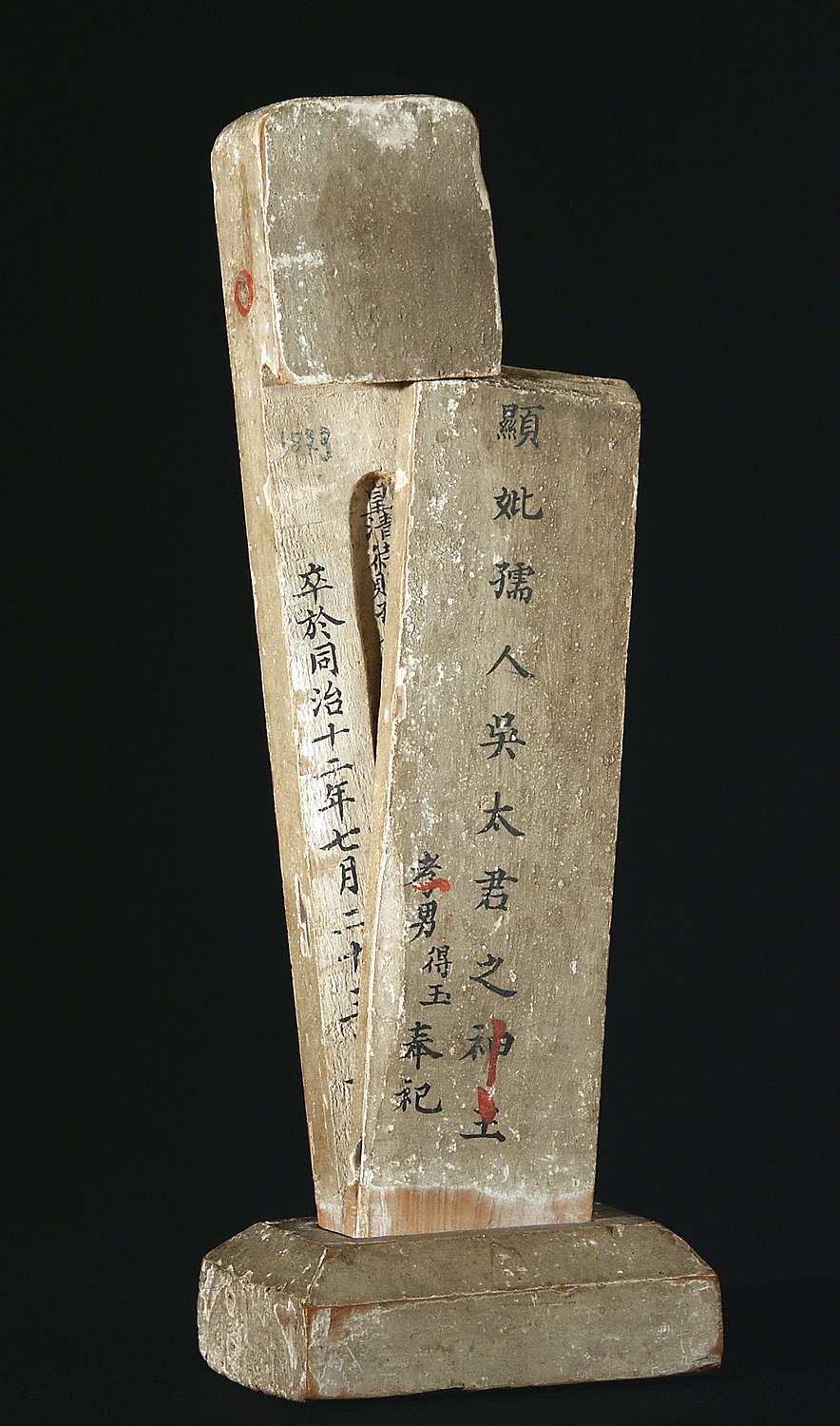
Ancestor memorial tablets (zuzong paiwei) are considered to be the seat of the spirit of the deceased after the funeral has taken place. They are usually placed on family altars inside homes and are the recipients of rites and offerings for the deceased.
If the tablets of other family members are also present, these are arranged hierarchically on the altar. The greater the number of tablets exhibited, the greater the prestige of the family.
The size and shape of the tablets vary from place to place, as do the ritual ceremonies of their consecration and placement on family altars. Wealthier families can use an entire room in the house as an ancestral hall or even have their own family temple.
The tablets are generally made of wood and made up of three parts: a pedestal, a longer rear part and a front part which, inserting itself into the previous one, has the effect of a single piece.
The external inscription may show the date of the ceremony of the transfer of the ancestor's spirit to the tablet, the name of the deceased, his title (if any), and the names of the children who prepared the tablet.
The inscription on the back instead records the day of birth and death and the place of burial of the deceased.
In the Museum in 1901-1947..


