Ritual Objects: Symbols and Spirituality in Congo

Ritual Objects: Symbols and Spirituality in Congo

  • 2025 Exhibit
  • When Objects speak: the spiritual secrets of the Lega People, In the Congo, objects teach. Masks convey wisdom. It’s the concrete spiritual reality of the Lega people at the Museum of Chinese Art and Ethnography
Mostra 2025 Ritual Objects: Symbols and Spirituality in Congo at the Museo d'Arte Cinese ed Etnografico, Parma

Ritual Objects: Symbols and Spirituality in Congo

When Objects speak: the spiritual secrets of the Lega People, In the Congo, objects teach. Masks convey wisdom. It’s the concrete spiritual reality of the Lega people at the Museum of Chinese Art and Ethnography

Goal and Target

In the Congo, objects teach. Masks convey wisdom. It’s the concrete spiritual reality of the Lega people. From October 23rd to March 8th 2026, our Museum presents "Ritual Objects: Symbols and Spirituality in Congo”, an exhibition dedicated to this population of the Democratic Republic of the Congo and its extraordinary cultural heritage.

Around thirty masks and statues will allow the visitors to discover a universe where the boundary between matter and spirit dissolves. Not simple artistic artifacts, but living testimonies of a spirituality that intertwines forms, actions, and sounds, as to dialogue with the sacred: ancestors, deities, natural forces.
Idimu Mask

Idimu Mask

Stories of Bami and Kanyamwa

The museum exhibits some assembled masks and objects with short didactic explanations of the stories told by the Bami themselves. These objects are "mediums" between the human weakness and the strength of the spirits; they are symbolic, and therefore they deform reality; more than stories to admire, one must imagine them alive and fleshed out in the reality of Congo.

Idimu mask

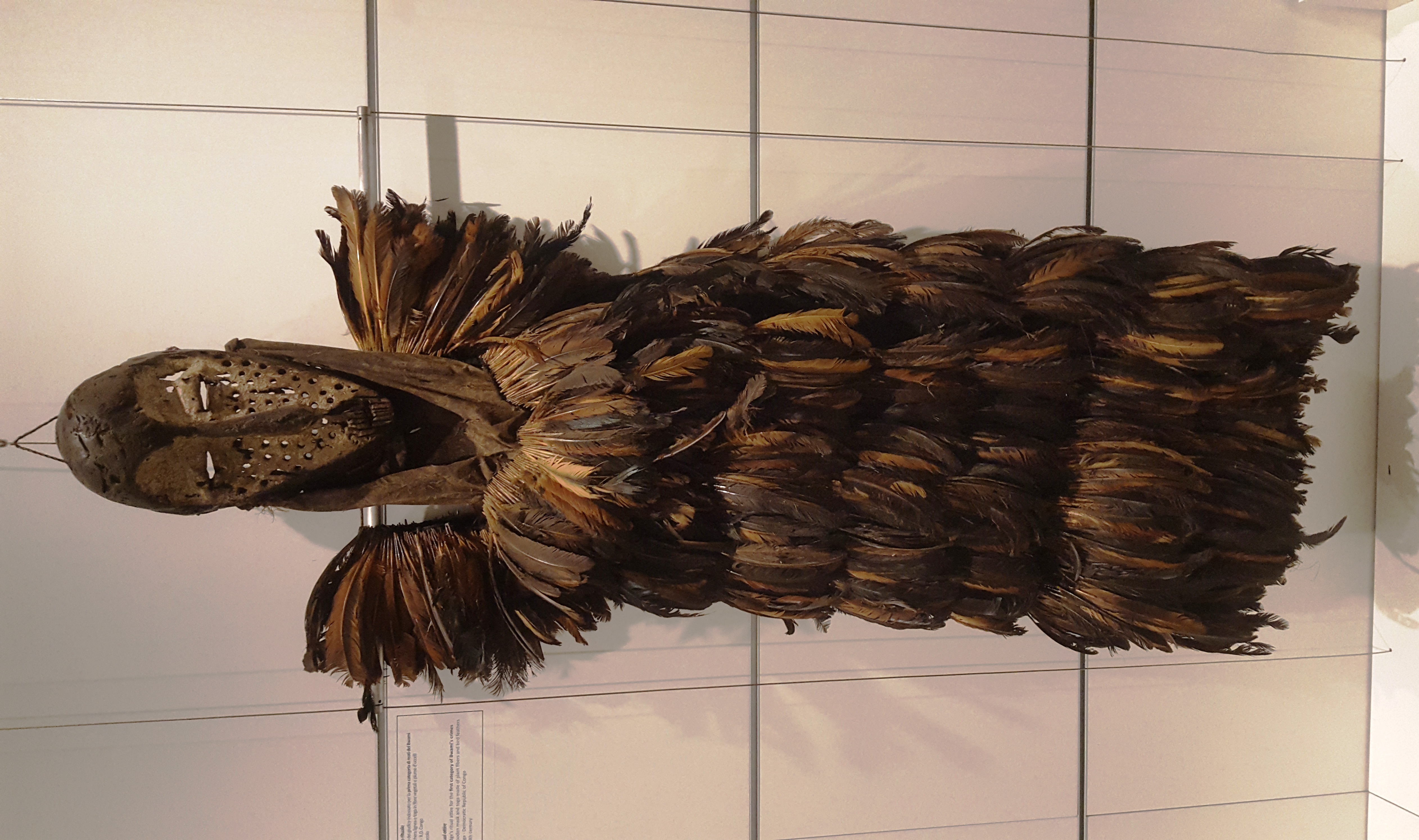
Anthropomorphic mask of ovoid shape, made of light wood; the eyes are prominent slit-like, joined to the bridge of the nose, it creates the characteristic 'heart' shape of the faces of the Lega mask. The 'idimu' wooden masks are large, have long beards and are almost always completely whitewashed.

Features

Objects and Symbols of the Sacred

Through ritual, a human being leaves the physical dimension to enter another space-time. These objects, manipulated during ceremonies, become bridges to what the senses alone cannot perceive

The tails of the masks and statues

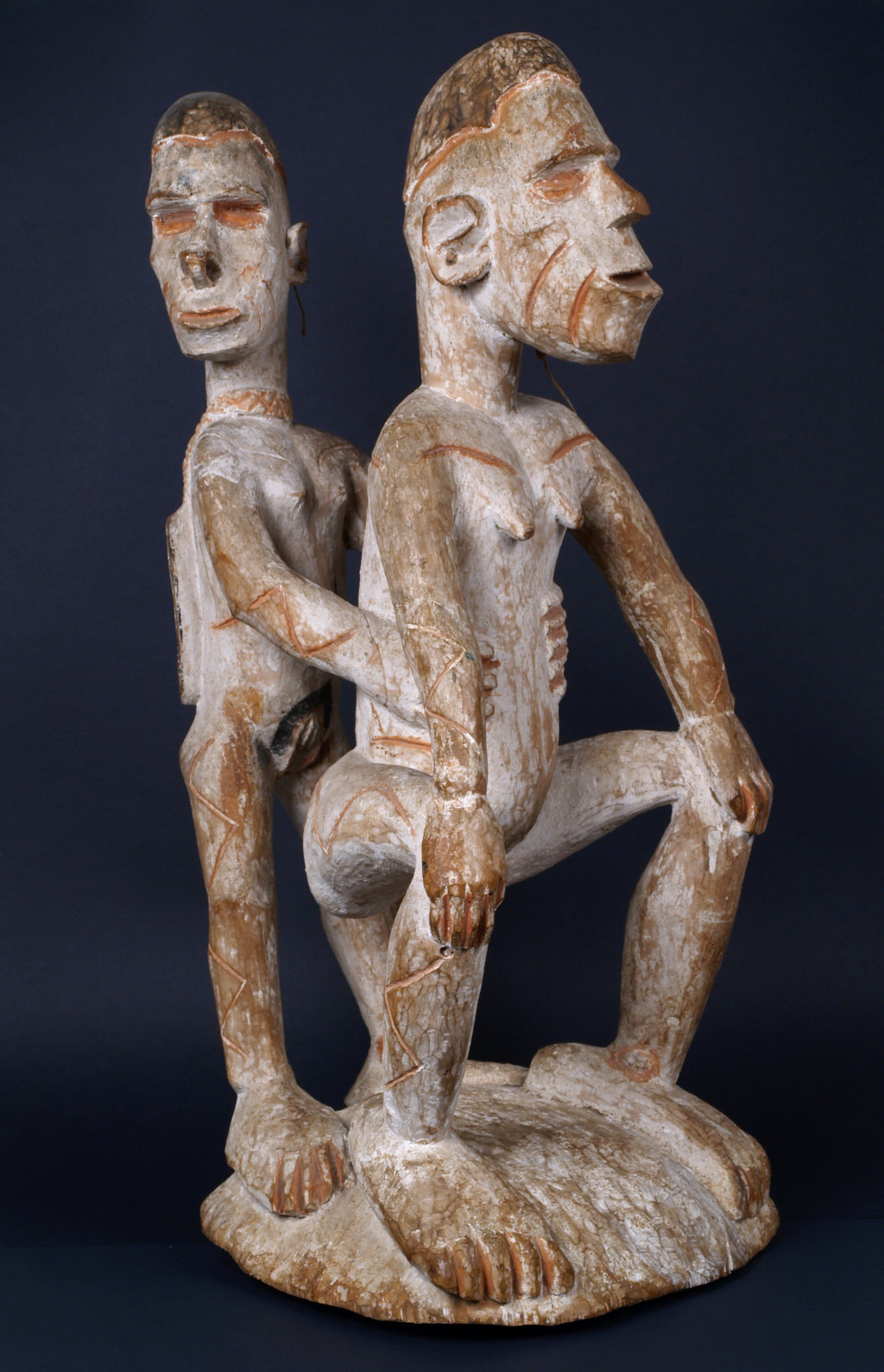
Since the initiation (called “mpala”) involves the use of many ritual objects, the Lega people require an extensive artistic production. The owners and guardians of these ritual objects (Bami and Kanyamwa) show them during the initiation, accompany them with music and dances, represent them with dramas and proverbs.These objects, and especially the masks, are "mediums" that connect the human with the supernatural. The ancestors are made present in them. Each toga and mask is accompanied by ritual figurines representing proverbs, sayings, and stories, to help young people identify principles of moral conduct and wisdom.
Typical minangkabau house model

Robes with masks

These are the three large robes worn by judges who are members of the "Bwami," the Lega's "secret" community, generally structured into five levels. Judges are chosen from among those who have reached the final and most important level, the "Kindi": they are capable of understanding the language of the main spirit of Lega religiosity. The masks are made of wood and plant or animal elements, such as pangolin skin, a sacred animal for the Lega, or elephant hair.

-  A story  -

The Hunter and the Red Ants

One morning, a hunter went hunting for the ceremony lunch. He took a lot of game, but not having any hunting companions, he left the game in the forest and returned to the village. When asked by his father "What have you brought home?", the hunter answered: "Today I broght nothing, but tomorrow you will see! I hid them in the forest. Nobody can steal from me what I have hunted."
While father and son talked, a red ant listened to their conversation, and right away ran to warn her companions, who gathered in millions to the place where the animals were killed. The next morning, the hunter with his wife and many porters went into the forest to recover the loot, but when they arrived there, they were surrounded and attacked by red ants, and they returned to the village empty-handed.
The wise father advised his son: "I told you not to go hunting alone, to have someone with you to help. But since the party has started, kill our chickens and goats."
From that day on, the Bami consume meat from domestic animals for their ritual ceremonies.
Painting Landscape

One of the panels of the Cord of Wisdom

Cord of Wisdom

Don't forget the "mutanga," the famous "Wisdom Rope," an educational display of 26 rotating panels that reveal the proverb and meaning of the objects hanging from the rope.
  • Visiting Times

    The exhibit “Ritual Objects: Symbols and Spirituality in Congo” is open from Tuesday to Saturday 9.00am-1.00pm and 3.00pm-7.00pm, and on Sunday 3.00pm-7.00pm from October 23rd 2025 to March 8th 2026.

    Tel. 0521-257.337
    This email address is being protected from spambots. You need JavaScript enabled to view it.

  • Guided Tours

    Your visit will be guided. The museum space is designed for groups of about 20 people (or less), so as to help appreciate and see the exhibits. The same opening hours of the Museum.
    Please call 0521-257.337.

  • The sacred animal of the Lega

    The pangolin, associated with various proverbs and stories, is a sacred animal of the Lega people, and eating it is forbidden. For this reason, wishing someone the chance to find pangolin scales is considered a bad omen.

Previous Exhibit

Next Exhibit

Read More

Possessed but Free Women

Possessed but Free Women

  • 2025 Exhibit
  • The new exhibit at our museum offers a journey into the Moussey (Musey) women of Chad, between sacred possession and social liberation: the new exhibition will take visitors to the heart of one of the most fascinating and complex ritual practices in sub-Saharan Africa.
Mostra 2025 Possessed but Free Women at the Museo d'Arte Cinese ed Etnografico, Parma

Possessed but Free Women

The Moussey (Musey) women of Chad between sacred possession and social liberation: the new exhibition will take visitors to the heart of one of the most fascinating and complex ritual practices in sub-Saharan Africa.

Goal and Target

The new exhibit entitled "Possessed but Free Women" offers a journey through one of the most ancient ritual practices, shared by many populations of northern Cameroon and Chad.

Elderly women, freed from domestic obligations, embark on a journey of transformation that leads them to become "su fulina" — embodied spirits — taking on a central role in the community that transcends family and village boundaries.
Large Vase

Necklaces of Musey Women

Necklaces

Cameroun

They are the emblem of the new status of women. Fragments of the bones and horns of animals recently sacrificed during the ritual, are interspersed among the beads, as well as roots and pieces of wood endowed with magical properties.

Features

A journey through objects and symbols

Pearl necklaces, bracelets, and anklets, ritual axes, bells, pipes, and belts reveal the symbolic universe of possessed women, along with the sacred colors — red and white, smeared on their bodies — that depend on the spirit that inhabits them

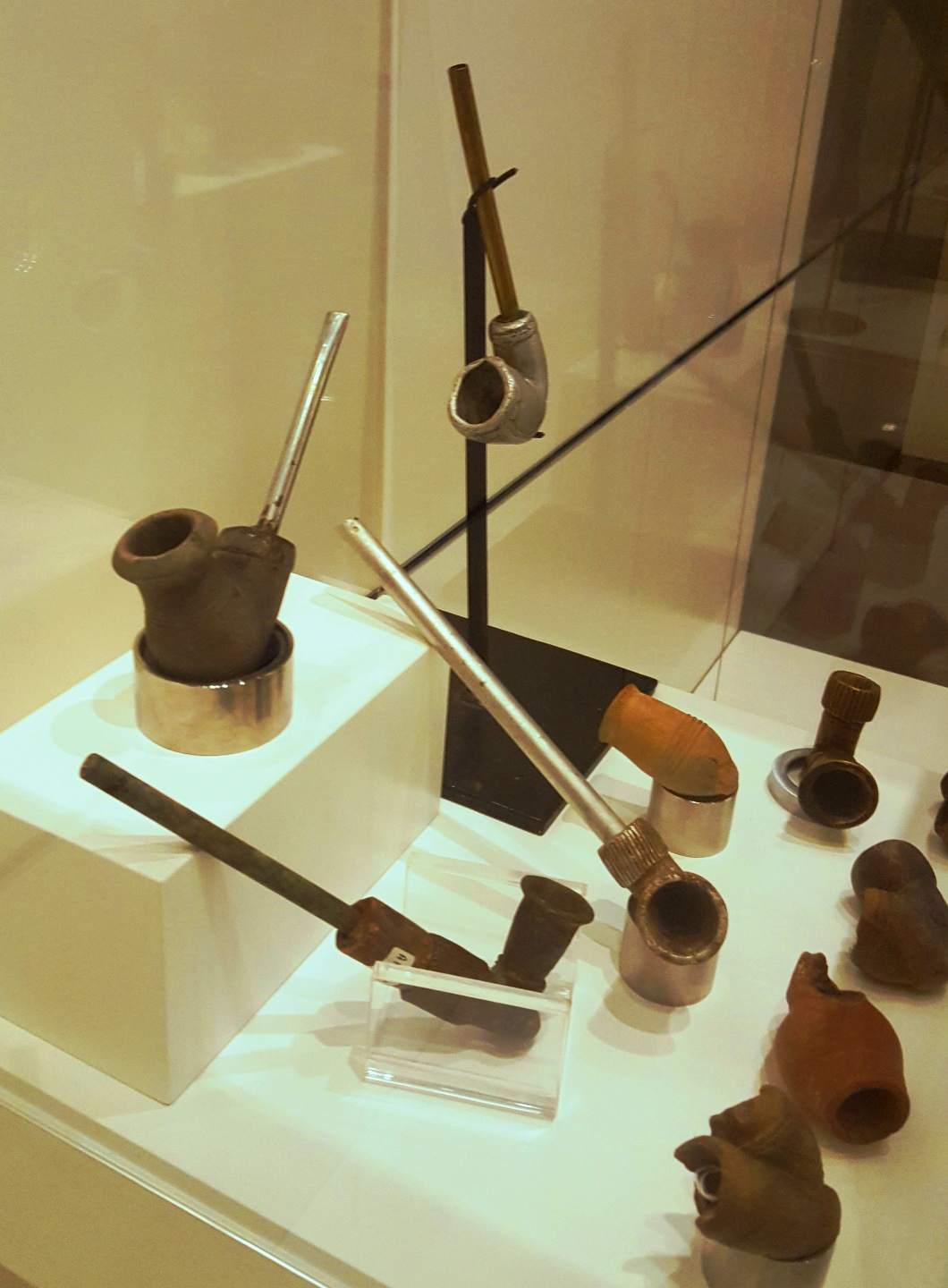
Pipes

Cameroun (20th century)

Made of terracotta or metal, they are the identifying ornaments of possesed women. Tobacco, which arrived towards the end of the sixteenth century, became one of the most common offerings to the deities. They are smoked by possessed women when they are consulted as oracles.
Typical minangkabau house model

Bracelets and anklets

Made of brass, copper, and more recently aluminum, they are cast using the lost-wax technique (the model is coated with a refractory material, which forms a mold). The wax is then melted and allowed to flow out, creating an empty space inside the mold into which the molten metal is poured. Also worn by ordinary people, those of possessed women are more valuable and elaborate.


Su Fulina photographs


The photographs immortalize "su fulina," women possessed by spirits, who are performing ritual activities and wearing traditional accessories. The photographic reportage was created by the French missionary Jean Loutron, who worked among the Moussey of Chad in 1960.
Painting Landscape

Bracelets and Anklets

Axes and Throwing Knives

Generally made of aluminum, sometimes iron, these objects are not used as actual weapons, but rather are waved by the possessed women, when they are animated by the spirit, to threaten and intimidate others.
Cameroun Chad Collection (20th century)
  • Visiting Times

    The exhibit “Possessed but Free Women” is open from Tuesday to Saturday 9.00am-1.00pm and 3.00pm-7.00pm, and on Sunday 3.00pm-7.00pm till September 28th, 2025.

    Tel. 0521-257.337
    This email address is being protected from spambots. You need JavaScript enabled to view it.

  • Guided Tours

    Your visit will be guided. The museum space is designed for groups of about 20 people (or less), so as to help appreciate and see the exhibits. The same opening hours of the Museum.
    Please call 0521-257.337.

  • Women at the Center

    The exhibition is not only an opportunity to discover artifacts, expressions of ancient craftsmanship, but also a clear demonstration of how women can place themselves at the center of vital social and cultural dynamics, transforming their own status and the customs of an entire people.

Previous Exhibit

Next Exhibit

Read More

Fakes, deceived and deceivers

Fakes, deceived and deceivers

  • 2024 Exhibit
  • The temporary exhibit at our museum offers a journey into the fakes among the cultures of the world, a perhaps unusual journey for an ethnographic museum to focus on the theme of art fakes. But the theme of art fakes and forgeries has amused critics and art scholars.
Mostra 2024 Fakes, deceived and deceivers al Museo d'Arte Cinese ed Etnografico, Parma

Fakes, deceived and deceivers

The exhibit at our museum is entitled "Fakes: deceived and deceivers", which offers a journey into the fakes among the cultures of the world.

Goal and Target

A unusual path for a museum like ours, that of focusing on the theme of Fakes, where critics and art scholars have been tormented since the paternity or maternity of a work of art determines its ultimate value, and because the discovery of deception and the hunt for the deceiver makes artistic evaluation an intriguing process.

The aim is to exhibit 23 works from our museum that are normally unknown to the public in which the styles of the Chinese Tang or Song dynasties, as well as reproductions of ancient Benin bronzes and Amazonian ritual diadems become the point from which to rekindle a flashback that brings ancient rites or traditions back to life. The Museum thus takes the opportunity to celebrate an "equal beauty" with the other works on display. The evaluations and reflections on these "Fakes" are up to the public.
Large Vase

Yellow Dragon Vase

Yellow Dragon Vase

China

A porcelain vase with a trumpet neck, rounded belly and expanded foot. Decoration: yellow dragons, clouds and flowers, on a red background.

It imitates a vase from the Ming Period, Emperor Jiajing (1522-1566). Very few vases of these colors were produced in the kilns of JingdeZheng. The original is preserved in a museum in Taipei.

Made in the early 1900s.
Qing Dynasty
Emperor Guangxu Period (1875-1908)

Features

Sancai Color Refinement

Porcelain is one of the great discoveries of the Chinese people. Over seven thousand years ago, artisans of the various Chinese ethnic groups were already able to produce colorful, functional and attractive terracottas.

Tripod Censer

China (20th century)

Tripod censer that wants to imitate the Sancai (three colors) of the Tang period (6th-10th century), made at the turn of the 20th century to feed the market in the West.

Rounded body with a short cylindrical neck and mouth opening. Three feet in the shape of a dragon. From the mouth of the vase there are two handles in the shape of a fantastic animal, whose jaws are joined to the body of the vase.
Typical minangkabau house model

Ceramics and Sancai

The coloring of the glazes was obtained by adding metal oxides (iron, copper and cobalt) which, during firing, gave rise to monochrome glazes (respectively, brown in various shades, green and blue). Among these, green glaze was the most widespread in the Han dynasty.

During the Tang dynasty, the combination of different shades of lead glazes left to drip onto the same object characterized sancai (“three colors”) ceramics, produced in the north and characterized by brilliant chromatic contrasts.

Benin Bronzes

They are bronzes that in several thousand plaques and sculptures decorated the Royal Palace of the Kingdom of Benin (Africa), a kingdom that extended across the borders of Chad, Northern Cameroun, and Nigeria. In the cube are displayed three copies: a woman with a jar on her head, a statue depicting a king of the Benin era, and a woman sitting on a stool. These copies were created for the tourist market.

Folk Art

Collectively the objects constitute the best examples of Benin art, and were created from the 13th to the 18th century by artists of the Edo people. Our examples were probably made in Cameroun in the 1900s.
Painting Landscape

Painting - Landscape

Painting - Landscape

Watercolor on paper, lined on paper and silk frame. Imitation of a painting by the painter Xi Gang (1746-1803).

The painting is of good artistic quality. The context of its creation is unknown. Possibly late 19th century.

Painting in China

In Chinese culture, painting and calligraphy are considered the highest form of art. There is therefore enormous admiration for the great masters of the past.

The paintings are not fakes as we conceive them in the West, but rather a tribute to that master in the typical Confucian attitude, according to the style of that master, openly declaring it in the calligraphy. Otherwise, if an author creates the same painting and signs it with the name of the imitated master, then this creation is a fake.
Private Collection (19th century)
  • Visiting Times

    The exhibit “Fakes, deceived and deceivers” is open from Tuesday to Saturday 9.00am-1.00pm and 3.00pm-7.00pm, and on Sunday 3.00pm-7.00pm till September 30th, 2024.

    Tel. 0521-257.337
    This email address is being protected from spambots. You need JavaScript enabled to view it.

  • Guided Tours

    Your visit will be guided. The museum space is designed for groups of about 20 people (or less), so as to help appreciate and see the exhibits. The same opening hours of the Museum.
    Please call 0521-257.337.

  • Practice Kayapò Diadem

    Kayapò Area

    Diadem of the Kayapò people for practice. In this case, it is not a real fake, but an object that the Kayapò define as "kajgo", that is, not usable during ceremonies, but only during practice of these ceremonies, so as not to ruin the authentic objects.

Previous Exhibit

Next Exhibit

Read More

Large Chinese vases and Contact Art

Large Chinese vases and Contact Art

  • 2023-24 Exhibit
  • The exhibit "Large Chinese vases and contact art" allows you to admire the collection of large vases, following an important restoration work, dating back to the Qing Dynasty.
Mostra 2022 Asia al Museo d'Arte Cinese ed Etnografico, Parma

Exhibit 2023: Large Chinese vases and Contact Art

The exhibit "Large Chinese vases and contact art" allows you to admire the collection of large vases, following an important restoration work, dating back to the Qing Dynasty.

Goal and Target

It is an enchanting journey of vascular art that celebrates its stylistic variety and shows its infinite good taste, typical of a way that is as ancient as it is wonderful.

The goal is the opportunity to explore that ceramic art, master of Chinese culture, shapes and decorates artefacts of tangible splendor, and favors the encounter between distant cultures, which communicate through the eloquence of beauty.

The Museum thus takes the opportunity to celebrate this wonderful connection in order to convey the message of mutual enrichment that arises from human intimate need for contact, a human, social and cultural contact.
Large Vase

Large Vase

Large Vase

China

Large vase with elephant head handles. “Green Family” enamel porcelain. Also called ceramics from the period of decadence.
The decoration presents a scene of children playing on one side, and a phoenix among the flowers on the other.
The slightly sloping shoulder is decorated with a band of lingzhi mushrooms.
On the one hand, the majesty of the Emperor, during an audience scene and a small crowd of characters.
Height 80 cm.
Made in Guangzhou for export.

Qing Dynasty
Emperor Guangxu (1875-1908)

Features

Contact between East and West

These are other worlds, other peoples, other cultures.
But the wisdom of life is only one

Western style Cup

China - Earthenware (20th century)

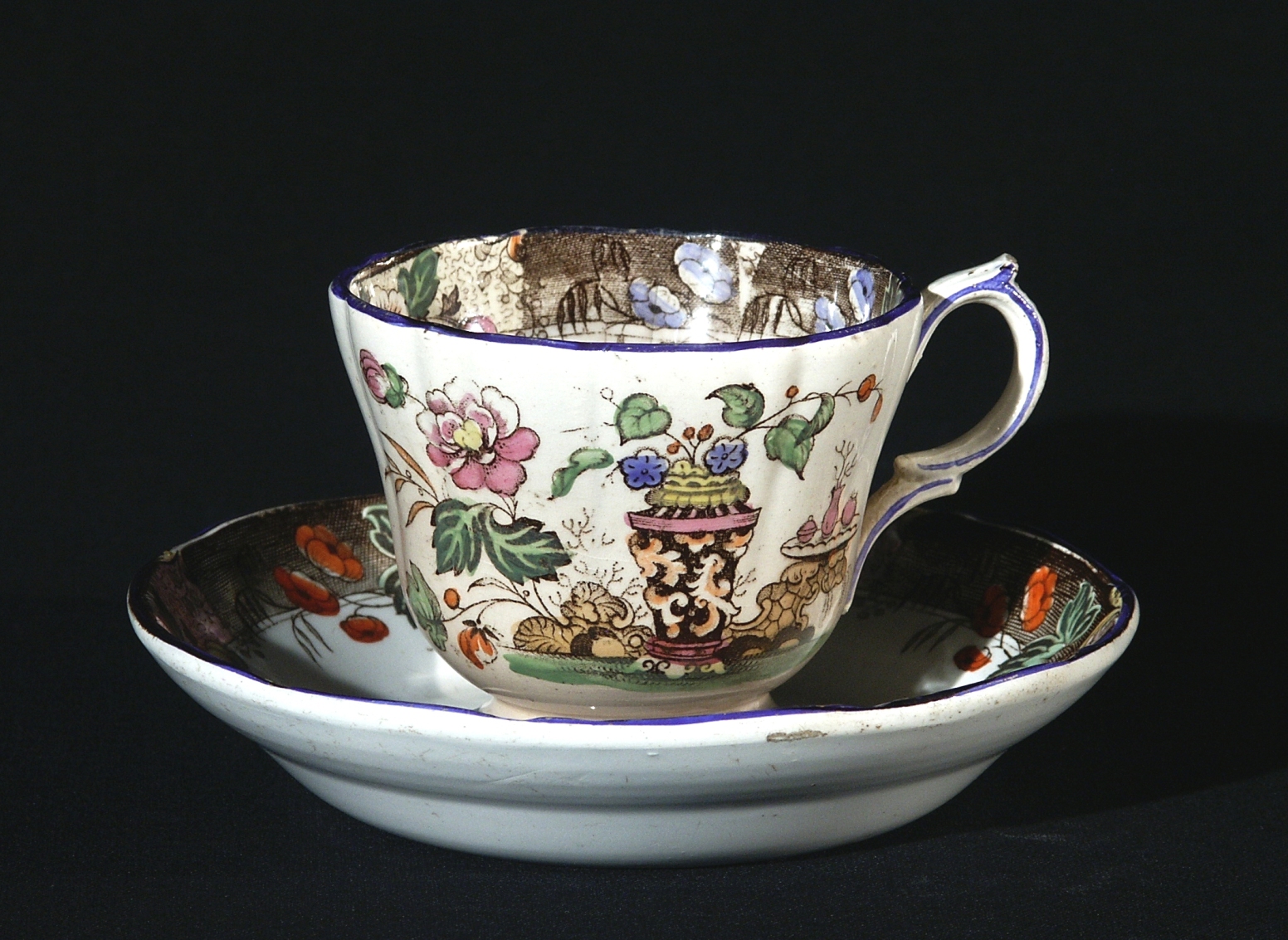
Western style earthenware cup decorated with applied decorations. The internal decoration is made with a band with an alternating brown and yellow background, in each of which a flower is painted. Made in China commissioned by the “Richard Ceramics Society” (later Richard-Ginori). They bear the “PEKIN” brand.
Typical minangkabau house model

Ceramics and Craftsmanship

The art of ceramics favors contact between the East and the West, between the workers of the highest Chinese craftsmanship and the great houses of the old continent who commission, with ever-increasing demand, exquisite porcelains with European shapes and decorations, a cultural medium of exceptional value.

Poster Series: "Tong su jiao yu tu” (Illustration for popular education)

The origin of this movement called "New Life", which pervaded all Chinese cities in the 1930s, can be found in the High General Chiang Kai Shek (more precisely Jiang Jieshi), President of the Republic of China. Reflecting on the economic-social conditions of the nation, he concluded: to raise the standards of China, we must begin with a new life, based on the four virtues, already taught and recommended by Confucius, mainly, urbanity, justice, temperance, honesty. The President was inspired by the Western world and common practices widespread in Europe and the United States.

The Bicycle

In Chinese the bicycle was defined by two names: one as "vehicle that turns on itself" and the other "vehicle where you place your foot". To use it, you must first learn to control the force of your feet. Once you learn the technique you can start moving. On flat ground, you can even pass the tram. Illustrations for popular education (1922)
Water Pipe

Cloisonné Vase

Cloisonné Vase

Large brass vase with cloisonné decoration, perhaps one of the largest made. Equipped with original pedestal.

Cloisonné Process

Once the container is made of smooth bronze, copper, silver or gold foils are glued on it, in the desired shapes. Then fine silver powder is spread over it and the object is heated in the oven to weld the plates to the vase. At this point the different cells are filled with the various colors obtained from vitreous pastes which are ground and placed in aqueous suspension. After several passages in the kiln and addition of color as this shrinks with heat, the piece is polished with pumice by hand or on the lathe.
Private Collection (20° secolo)
  • Visiting Times

    The exhibit “Large Chinese vases & Contact Art” is open from Tuesday to Saturday 9.00am-1.00pm and 3.00pm-7.00pm, and on Sunday 3.00pm-7.00pm till February 28th, 2024.

    Tel. 0521-257.337
    This email address is being protected from spambots. You need JavaScript enabled to view it.

  • Guided Tours

    Your visit will be guided. The museum space is designed for groups of about 20 people (or less), so as to help appreciate and see the exhibits. The same opening hours of the Museum.
    Please call 0521-257.337.

  • Large “A Thousand Flowers” Vase

    China - Ceramic
    Qing Dynasty
    Emperor Qianlong (1736-1795)

    Large “Millefiori” type vase. “Pink Family” porcelain.
    Height 86 cm.

Previous Exhibit

Next Exhibit

Read More

Asia and its story tales

"Asia" and its story tales

  • 2022-23 Exhibit
  • Born from the great project "Favole dei 4 continenti" produced by our Museum and the publisher EMI, this work which includes the publication of 4 volumes, aims to enhance the great work of collecting, transcribing and translating fairy tales from non-European peoples, accomplished by the Xaverian Missionaries during their centenary work
Mostra 2022 Asia al Museo d'Arte Cinese ed Etnografico, Parma

Exhibit 2022-23: “Asia” and its story tales

A new exhibition born from the great project "Favole dei 4 continenti" (Fairy tales of the Four Continents) produced by the Museum of Chinese Art and Ethnography and editor EMI.

Goal and Target

Through the publication of 4 volumes, this exhibit aims to enhance the great work of collecting, transcribing and translating fairy tales of non-European peoples, carried out by the Xaverian Missionaries.

The goal of the project is to bring traditional fairy tales to the knowledge of the general public, as to ensure that great human values imbued with experience and tradition can inspire new Western generations.

Each story is accompanied by an illustration, which is important for the reader as to get closer to the styles and symbols of a distant world.
The Counseil of the Rishi

The advice of the Rishi

The advice of the Rishi

India

“There was a man who answered the name of Progiapoti, that is “butterfly.” He was held in high esteem by everyone, for he was considered a saint, or a Rishi, a teacher.
One day, three individuals seeking a word of wisdom appeared before him: the first was a god, the other a man, and the third was a devil.
Progiapoti asked:
— What do you want?
The three answered together:
— Good advice for life…”

Features

Oriental Wisdom

These are other worlds, other peoples, other cultures.
But the wisdom of life is only one

Typical minangkabau house model

Indonesia - Wood and vegetable fiber
(20th Century)

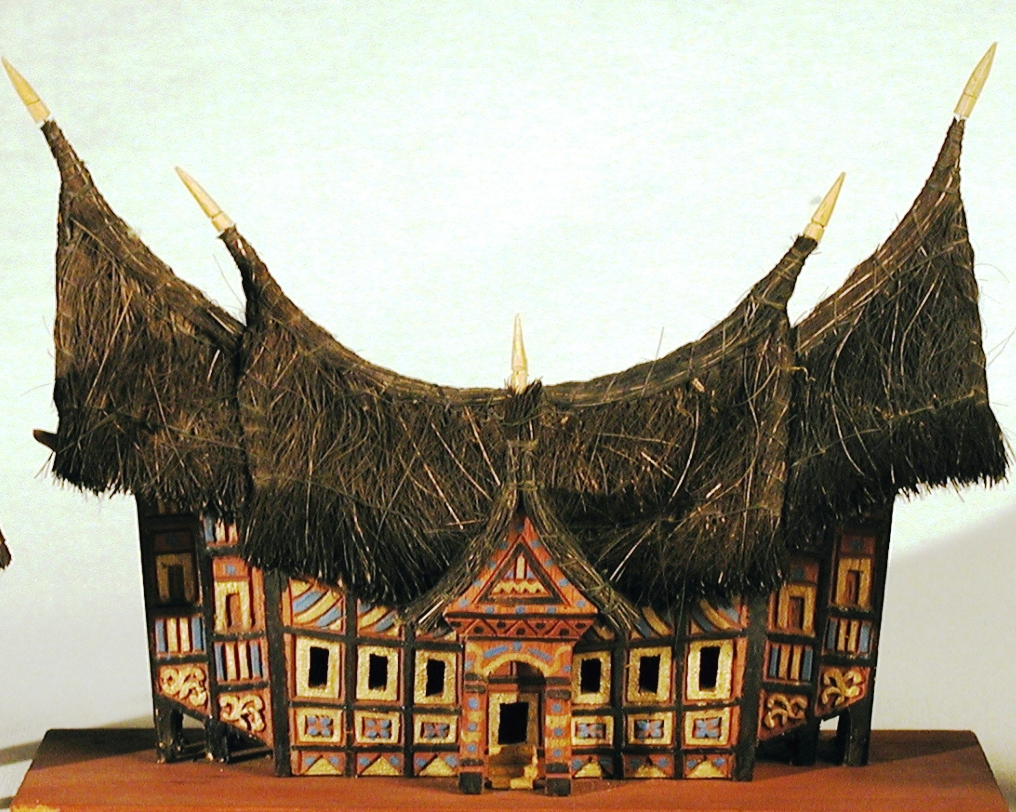
The Cuspids of the Minangkabau houses are buffalo horns, in memory of the legend that saw the victorious Minangkabau through a clash between two buffaloes of opposite factions.
Typical minangkabau house model

Human Richness

Buddha

Everything we have is the result of what we have thought
The value of a person is in what that person strongly desires to achieve. The dream belongs to those who desire to fly: to always and everywhere feel out of place, without roots, and to be at ease in the legendary countries built by imagination.

The weeping willow

“... I am the soul of that willow and now I know that I must die because you cannot, nor must, disobey the Daimyo, your lord.
— No, no! Cried Inabata, you can't leave me ...
She stretched out her arms in an attempt to hold her back, but by now she was no longer a woman: she was a ghost who walked away, tenderly, whispering her last word ... Goodbye”

Fairy tale from Japan
Water Pipe

Water Pipe

Water Pipe

Called “shui yan dai” in Chinese with cloisonné decoration on the shells and auspicious engravings along the mouthpiece.

The pipe was not only important for its functionality. It was an object of artistic and cultural care, and it had to show something more. In addition to the more or less noble materials, it had to possess and release an aesthetic sight, it had to contain a message, the reproduction of a poem, a wish, a landscape, a scene from everyday life, the decorative objects common to Chinese imagination and art such as flowers, birds, etc. and the base lent itself to these purposes.

Objects of current use, made with techniques and materials such as to strike the imagination of Westerners not only for their decorations, constituted a large part of the exports intended to satisfy curiosity, that was not only aesthetic but also of an ethnographic nature.
  • Visiting Times

    The exhibit “Asia” and its fairy tales" is open from Tuesday to Saturday 9.00am-1.00pm and 3.00pm-7.00pm, and on Sunday 3.00pm-7.00pm till february 14, 2023.

    Tel. 0521-257.337
    info@museocineseparma.org

  • Guided Tours

    Your visit will be guided. The museum space is designed for groups of about 20 people (or less), so as to help appreciate and see the exhibits. The same opening hours of the Museum.
    Please call 0521-257.337.

  • The 2000 years old Hatchet “ge”

    China - Bronze
    Used from the 11th century B.C. to the 2nd century A.D.

    Come and discover the 2,000-year-old "ge" ax, a multipurpose tool: used as an agricultural tool in times of peace, or as a spear fixed on a pole in the event of war.

Previous Exhibit

Next Exhibit

Read More

Respect and Devotion

Respect and Devotion

  • 2022 Exhibit
  • The new exhibit of the Museum on the great ways of Chinese religions. Eleven traditional paintings are exhibited as in Ancient China and, thanks to the educational example method, they illustrate the great virtues that every Chinese subject has within itself in a particular dynastic period.
Mostra 2022 Rispetto e Devozione al Museo d'Arte Cinese ed Etnografico, Parma

Exhibit 2022: Respect and Devotion


A new exhibition project enlivens the summer of the Museum of Chinese Art and Ethnography of Parma. Thanks to the exhibition of Chinese paintings of exemplary stories, it is possible to examine the very essence of the great Chinese religions.

Goal and Target

The exhibit displays a series of color paintings that depict traditional examples, often paradoxical to our eyes, of the absolute devotion that must be reserved for parents.

This devotion is the common principle and basis of the two great philosophical currents that animated Chinese religious thought: Confucianism and Taoism.

Both originate from the ancient, and ever-present, ancestor cult.

Cina - Abito Liturgico Taoista

Wang Pou - Amid thunders,
he cries over his Mother's grave

Amid thunders,
he cries over his Mother's grave

Wang Pou

Wang Pou from Wei State looked after her mother with genuine dedication. While alive, his mom was terribly afraid of thunders. After her death, whenever Pou felt a storm approaching, he would run to her mother's grave and, crying, he would say "Pou is here, mom, don't be afraid of her." A poem celebrates him thus: "The beloved mother was afraid of thunder; now that her body rests among the dead, and Anxiang noisily runs up and down, the boy runs to the grave and walks it thousands of times."

Features

Containers in the shape of tree trunks

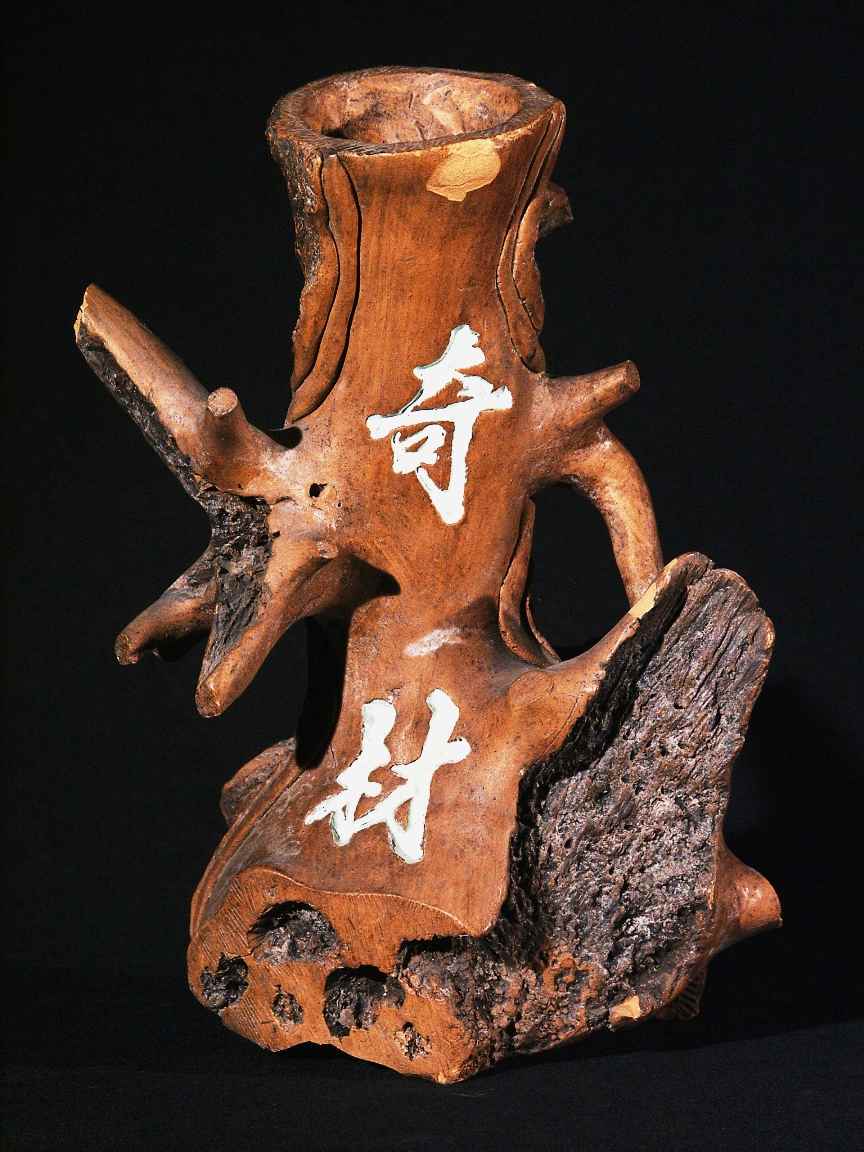
Natural elements are dear to Taoism; the two characters mean "strange forest". In stoneware.

Confucianism and Taoism

Confucianism and Taoism are ancient Chinese lifestyles founded respectively by Kung Fuzi (551 BC -479 ° .C.) and by Laozi (who lived in the 6th century BC) therefore practically contemporary, but structured in later periods, especially for Taoism which was institutionalized only in the first century after Christ.
The difference between these two philosophies is based on their teachings, where Taoism is almost exclusively about the relationship between man and nature, and Confucianism is more about the relationship between man and society.

Burqa del Bangladesh

Humanity

The core of Confucianism is humanity, morality and ethics. The main focus is on the basic relationship between human beings and society. It encourages social harmony and mutual respect between people.

The Person

Taoism has a direct focus on the person and his place in nature. However, he has a more liberal and direct perspective on life. It focuses on a person's relationship with himself to achieve inner harmony. It encourages an individual to understand and accept the natural and social values of the world, and in this way allows one to be in tune with one's inner self.

She nurses the mother-in-law
with her own milk

Cui Nanshan, of Tang dynasty, lived with her elderly mother-in-law Zhangsun. She was very old and toothless. Every day her daughter-in-law, Nanshan, combed her hair, washed her face and, since she could not chew anything, fed her with her own milk. In this way, the elderly lady lived in good health for many years. When she was dying, she said, "There is no way I can repay the favors my daughter-in-law has done for me and I want her as example for everyone."

A poem celebrates her as follows: "The filial daughter-in-law of the Cui family, nursing her mother-in-law after having combed and washed her every morning; this kindness cannot be repaid, but it is desirable that she receive the same treatment from her children and grandchildren."

Collana maschile mubanga

Li Tieguai, one of the Eight Immortals

Li Tieguai and the Eight Immortals

Li Tieguai, one of the Eight Immortals, holding the container of his magical medicine and staff. China white porcelain. Qing Dynasty period, Daoguang Emperor (1821-1850).

Often described as short-tempered and irritable, but also generous to the poor, the sick and the needy, whose suffering is alleviated by a special medicine extracted from his gourd. It symbolizes medicine and the image of him was used as an emblem of Chinese pharmacies.

He was summoned by Laozi to the mountains of Longevity to meet the other Immortals. He has the appearance of a ragged and lame beggar holding a pilgrim's flask containing his magical medicines and, in the other, an iron staff he leans on.

  • Visiting Times

    The exhibit "Respect and Devotion" is open from Tuesday to Saturday 9.00am-1.00pm and 3.00pm-7.00pm, and on Sunday 11.00am-1.00pm and 3.00pm-7.00pm for the entire year.

    Tel. 0521-257.337
    info@museocineseparma.org

  • Guided Tours

    Your visit will be guided. The museum space is designed for groups of about 20 people (or less), so as to help appreciate and see the exhibits. The same opening hours of the Museum.
    Please call 0521-257.337.

  • Religion or Phylosophy

    The substantial difference that characterizes these two philosophical thoughts is that, unlike Confucianism which is essentially secular even if it believes in a God who is quite alien to humans, Taoism believes in the survival of the soul and therefore can be considered a true religion, even if of a polytheistic nature.


Previous Exhibit

Next Exhibit

Read More

Fashion in the World

Fashion in the World

  • 2019 - 2021 Exhibit
  • The exhibit "Fashion in the world: clothes tell the life of peoples", is held in Parma, Italian Capital of Culture 2020, from Jan. 26th 2020 to Aug. 29th 2021. The exhibit traces a journey through the traditions of the world, through clothing, ornaments and accessories, starting with the Chinese culture.
Mostra didattica 2020 Mode nel mondo al Museo d'Arte Cinese ed Etnografico, Parma

Exhibit: Fashion in the World - Mode nel Mondo


New didactic exhibit of the Museum of Chinese Art and Ethnography. The exhibit “Fashion in the world - Mode nel Mondo: clothes tell the life of peoples” traces a journey through the traditions of the world, through clothing, ornaments and accessories, starting with the Chinese culture.

Goal and Target

The exhibit "Fashion in the world: clothes tell the life of peoples", is held in Parma, Italian Capital of Culture 2020-21, from Jan. 26th 2020 to Aug. 29th 2021.

Clothing and ornaments make us peoples, who belong to a group, a social status, an ethnicity. Clothing is a real form of codified communication and easily interpretable on a social level.

The halls of the museum allow for a trip around the world on the subject of clothing, offering images, objects, new and ancient artifacts, for visitors, schools and groups.
China - Taoist liturgical vestment, rear

China - Taoist Liturgical Vestment

Taoist Liturgical Vestment

Taoist Vestment - Front

Silk made with manual loom; the embroideries are in gold thread and polychrome yarns, representing classic symbols of Taoism (animals, immortal figures, symbols of the Chinese zodiac and allegorical elements); first half of 1800.

Details

Burqa from Bangladesh

Traditional dress of the Bengali Muslim women in light blue cotton, consisting of a tunic, which completely covers the head and face, and a skirt.

The origin of the Veil

Hijab is a general term that refers to the practice of wearing veils of all kinds. This practice is not simply about religion: women wear it for a variety of reasons that can change, depending on the time and social context.

Is the veil an Islamic requirement?

Muslim writings are not entirely clear on the issue of the veil. Various passages in the Koran (the Holy Book) and in the Hadith (attributed to the prophet Muhammad), refer to the veiling of the prophet's wives. But scholars disagree that these claims apply only to the prophet's wives, or to all Muslim women. The Koran asks both men and women to "cover themselves up and be modest".
Burqa from Bangladesh

The veil, symbol of identity

However, there are other reasons for the practice of wearing the veil. In the past, French and British colonizers forced Muslim women to remove the veil to imitate European women. As a result, in the countries of North Africa and the Middle East, the veil became a symbol of national identity and opposition to the West during the independence and nationalist movements.

Feminine beauty today

Today some women wear hijab as a sign of their ethnic identity. For many other women, the veil has become a means of resistance to female Western beauty standards.

The legend of the fisher-woman with the Qipao

There was a young fisherwoman living near a place called Jingbo Lake. She was not only very beautiful but also clever and skillful. Her only problem: when fishing, she often felt hindered by her long and loose-fitting clothing. Then an idea struck her: why not make a more practical dress to wear when fishing?
She then got down to sewing and produced a long, loop-buttoned gown with wonderfully practical slits down the sides of the skirt for tucking in the front part of her dress. Her creation allowed her to fish with greater ease, but she never imagined that it would bring her good fortune as well.
The young emperor who ruled China at the time had a dream one night. In the dream, his dead father told him a lovely fisherwoman wearing a long dress, who lived by Jingbo Lake, would become his queen. After awakening from this vivid dream, the emperor sent his men to look for the mysterious woman. And sure enough, they found her just where his father said.
So she joined the emperor as his queen, bringing her lovely Cheongsam with her. Manchu women all followed suit and soon Qipao became all the rage throughout China
Collana maschile mubanga

Male necklace “mubanga”
Dem. Rep. of Congo

Congo - Traditional Lega clothing signs

Some elements of traditional clothing that constitute both the emblem of belonging to the initiatory secret society "Bwami", and the degree reached in the same society, are headdresses, chest straps, necklaces.
The man “mwami” and the main wife progress in the various steps of the society together. The “bwami” society is secret as it regards to rituals and teachings that are seen and learned; those who belong are instead known, and proud to be part of it. The highest achievable degree is called “Lutumbo lwa kindi” for the men and “Kanyamwa” for the women.
  • Visiting Times

    The exhibit "Fashion in the World - Mode nel Mondo" is open from Tuesday to Saturday 9.00am-1.00pm and 3.00pm-7.00pm, and on Sunday 11.00am-1.00pm and 3.00pm-7.00pm for the entire year.

    Tel. 0521-257.337
    mail@museocineseparma.org

  • Guided Tours

    Your visit will be guided. The museum space is designed for groups of about 20 people (or less), so as to help appreciate and see the exhibits. The same opening hours of the Museum.
    Please call 0521-257.337.

  • Shawl from Sumatra - Indonesia

    Discover the cotton shawl with silk embroidery and conterie called "ulos", a very significant artifact in Batak culture, used in past times in everyday life to carry children or objects. On the day of the wedding, the father of the groom places it on the shoulders of the newlyweds, to emphasize the unity of the spouses and their families.

Previous Exhibit

Next Exhibit
Read More

Eternal Mothers - Madri Eterne

Eternal Mothers

  • 2018 - 2019 Exhibit
  • The exhibit "Eternal Mothers - Madri Eterne", an intercultural journey through representations of motherhood, to discover the varied interpretations of the magical moment of motherhood. Thoughts on motherhood
L'ultima Eredità dei Lega Mostra didattica sull'arte africana dei Lega, Congo al Museo d'Arte Cinese ed Etnografico, Parma

Exhibit: Eternal Mothers - Madri Eterne


New exhibit 2017-2018 “Eternal Mothers - Madri Eterne” of our Museum through representations of motherhood: A journey around the world to discover the varied interpretations of the magical moment of motherhood. The exhibit highlights paintings, sculptures, tapestries and photographs of Chinese, Indonesian, Japanese, Ecuadorian, Mexican, Australian, African and Indian civilizations

Goal and Target

For the school year 2018-19, our museum has inaugurated a new exhibit entitled "Eternal Mothers - Madri Eterne", an intercultural journey through representations of motherhood. It's a journey around the world to discover the varied interpretations of the magical moment of motherhood.

Mother Earth and her anthropomorphic representation descended into the cultural fabric of each people, and it differs according to the ethnic group that investigates its meaning, aiming to give it a physical representation permeated by the sacredness and eternal mystery of the cyclic repetition of reproduction.

Educational exhibition for schools of all levels
Giappone - Kannon, divinità buddista Protettrice di bambini

Japan - Kannon, buddhist deity Protectress of children

Motherhood: Knowledge and Living

The exhibit "Eternal Mothers" develops the common meaning of motherhood, reflecting on the different representations of knowledge, and the experience of motherhood itself.

Interesting is to note that a primordial experience, such as the birth and care of children, has artistic or handicraft returns which are so different according to the peoples and ethnicities of origin.

The aim of this exhibition is a profound reflection in a multicultural world; it is a tangible transport of a common destiny of the human being in its earthly celebration.

Details

Woman in labor of the Asmat people

The Asmat inhabit the south western part of the island of Papua, an area formed by marshes, magovie and river forests. The population is around 70,000 inhabitants.

Indonesia

Practically unknown to the outside world until the 1950s, the Asmat have a tradition of wood carving as one of the best known and most vibrant in the Pacific area.

Life and Death

In order to understand the Asmat art, we must refer to their beliefs regarding the relationship between life and killing. Because death could only be attributed to war or magic, they believed that every death should be avenged. All the carved ritual objects were made to remind the living of their duty to take revenge, and these carvings became the abode of the dead.
Woman in labor and midwife in the Asmat culture

Wood Sculptures

The artifacts of the Asmat people are sought after by museums and collectors all over the world. Their art is modern, abstract and geometric.

Woman in Labor and Midwife

Giving birth on your feet is quite normal in this culture, as it once was in Italy when giving birth in our homes. At the moment of the traditional birth, the woman in labor is helped by a young woman.

Thoughts

“Where have I come from, where did you pick me up?” the baby asked its mother. She answered, half crying, half laughing, and clasping the baby to her breast: “You were hidden in my heart as its desire, my darling.” (Tagore)
A child is something that you carry within you for nine months, in your arms for three years, and in your heart until the day you die.
Even the photos of children made by the mother, are different from those of the father. (Beno Fignon)
The best academy is a mother's knee. (James Russell Lowell)
Forget not that the earth delights to feel your bare feet and the winds long to play with your hair. (Kahlil Gibran)
The virgin Mary from Sierra Leone

The Virgin Mary from Sierra Leone


She is our African Madonna

The Virgin Mary; wood and tempera.
Commissioned in the 80s by the Xaverian Father Berton, a missionary in Sierra Leone, to an artist of Makeni for the church of Bumbuna, in the context of inculturation of the liturgy. At the beginning, since the church in Bumbuna was not yet built, it was used in the school, and then donated to the Museum.
Come and discover it, it will comfort you with its sweet and maternal look. Height 115 cm.
  • Visiting Times

    The Exhibit "Eternal Mothers - Madri Eterne" is open from Tuesday to Saturday, 9.00am-1.00pm and 3.00pm-7.00pm, and on Sunday, 11.00am-1.00pm and 3.00pm-7.00pm for the entire school year.

    Tel. 0521-257.337
    mail@museocineseparma.org

  • Guided School Tours

    Your visit will be guided. The museum space is designed for groups of about 20 people (or less), so as to help appreciate and see the exhibits. The same opening hours of the Museum.
    Please call 0521-257.337.
  • The triumph of Woman in Africa

    In Africa, motherhood represents the triumph of women. In many cultures infact, the representation of mother and son summarizes the story of a people, and celebrates its myths. One can certainly say that motherhood is in African art like the Madonna and the Child are in Christian art.

Previous Exhibit

Next Exhibit

Read More

The Last Heritage of the Lega

The Last Heritage of the Lega

  • 2017 - 2018 Exhibit
  • "Mwami" Tam, Guardian of the Lega people Images, objects, phrases, new and ancient artifacts Cord of Wisdom and stories of Bwami Lega statues and masks from Congo
The last Heritage of the Lega, at the Museum of Chinese Art and Ethnography

Exhibit: The last Heritage of the Lega


New exhibit 2017-2018 “The Last Heritage of the Lega” of the Museum of Chinese Art and Ethnography on the Lega african art of Congo, with a collection of statuette ensembles, masks sets, explained by a variety of stories of the Lega people of Congo

Goal and Target

The Museum of Chinese Art and Ethnography presents “The Last Heritage of the Lega”, an exhibit on the Lega african art of Congo, which includes the "Cord of Wisdom", stories of Bwami and Kanyamwa, statues and masks from the people Lega of the Democratic Republic of Congo!
A teaching exhibit for schools and classes.
P. Tam, guardian of the Lega

Fr. Tam, Guardian of the Lega people

P. Tam, Guardian of the Lega people

After a long friendship, Fr. Tam who has shown interest on the Lega objects and symbols, has worked hard to alleviate the suffering of this people during the many wars in the area, gathering traditional rituals which are dear to the Lega area.

Details

The Wisdom Cord

Among the Lega people, a rope or cord was strung in the common house, at the center of the village, as a teaching tool for children. On the rope made of fibers hung objects taken from the world that surrounds the village (vegetables, animals, everyday use) as well as miniatures of tools and figures.

Cord - Mutanga

Our museum exhibit begins with the Wisdom Cord, with 26 revolving tablets which reproduces the meaningful proverbs of the objects hung on the cord.

The tails of the masks and statues

Since the initiation (called “mpala”) involves the use of many ritual objects, the Lega people require an extensive artistic production. The owners and guardians of these ritual objects (Bami and Kanyamwa) show them during the initiation, accompany them with music and dances, represent them with dramas and proverbs.
Corda della Saggezza Corda della Saggezza

Principles of Conduct

Each object has one or more proverbs, retells a story, recalls an anecdote, to remind the youth the moral principles and wise behavior. The cord is like an open book, where children learn, think and reason on the common ideals of the village life.

Stories of Bami and Kanyamwa

The museum exhibits some assembled masks and objects with short didactic explanations of the stories told by the Bami themselves. These objects are "mediums" between the human weakness and the strength of the spirits; they are symbolic, and therefore they deform reality; more than stories to admire, one must imagine them alive and fleshed out in the reality of Congo.

-  A Story  -

The Hunter and the Red Ants

One morning, a hunter went hunting for the ceremony lunch. He took a lot of game, but not having any hunting companions, he left the game in the forest and returned to the village. When asked by his father "What have you brought home?", the hunter answered: "Today I broght nothing, but tomorrow you will see! I hid them in the forest. Nobody can steal from me what I have hunted."
While father and son talked, a red ant listened to their conversation, and right away ran to warn her companions, who gathered in millions to the place where the animals were killed.
The next morning, the hunter with his wife and many porters went into the forest to recover the loot, but when they arrived there, they were surrounded and attacked by red ants, and they returned to the village empty-handed.
The wise father advised his son: "I told you not to go hunting alone, to have someone with you to help. But since the party has started, kill our chickens and goats."
From that day on, the Bami consume meat from domestic animals for their ritual ceremonies.

The "mwami" Tam:
the one who pays attention to the words of the Bami

One day, 23 bami gathered and conferred on Fr. Tam the title of “mwami” because they witnessed in him an heir of their cultural world. They called him “the one who is attentive to the words of the bami”. One significant gift received during the ceremony is a "hook" that represents the Lega proverb: “where the hand does not reach, the hook will reach”. This is precisely the function entrusted to Fr. Tam: to be the link between the culture of Bami and Europe.
  • Visiting Times

    The Exhibit "The Last Heritage of the Lega" is open from Tuesday to Saturday, from 9.00am to 2.00pm, for the school year.

    Tel. 0521-257.337
    mail@museocineseparma.org

  • Guided School Tours

    Your visit will be guided. The museum space is designed for groups of about 20 people (or less), so as to help appreciate and see the exhibits. The same opening hours of the Museum.
    Please call 0521-257.337.

  • African Art of Congo

    Collection of Fr. Tam on the Lega african Art, with statuette ensembles, masks sets made of ivory, stone, bone and wood, explained by a variety of stories of the Lega people, one of the 400 ethnic groups who live in Congo.


Previous Exhibit

Next Exhibit

Read More

Creation, Common Good

Creation, Common Good

  • 2016 Exhibit
  • Laudato Si' - The Care of our Common Home Video Tale - Ben Said and the Owl Multi-vision - The Legend of the Rainbow
Creato, Bene Comune, mostra sul rispetto dell'ambiente al Museo d'Arte Cinese ed Etnografico, Parma

Exhibit: Creation, Common Good


Exhibit 2016 of the Museum of Chinese Art and Ethnography is entitled "Creation, Common Good", based on the encyclical of Pope Francis “Laudato Si’” on the care of our common home.

Goal and Target

Exhibit on the care of our common home. Ecology needs to become a new paradigm of justice, because nature is not a "mere frame" of the human life.
A teaching exhibit for schools and classes.
La bellezza della Natura

The Beauty of Creation

Caring for Nature

Our museum offers images, objects, phrases, new and ancient artifacts, for visitors, schools and groups, to reflect on the beauty of nature, the need to overcome the culture of waste, and to promote human ecology. We know: we are wasteful!

Details

Ben Said and the Owl

The new educational video, such as "Ben Said and the Owl" or the new multi vision "The Legend of the Rainbow" affirms the theme of multicultural approach of the museum of the Xaverian Missionaries, that targets schools of every kind and degree.

Ecology

The didactic tour begins with 26 illustrated double-sided tiles which reflect on aspects of Creation, Common Good, to be respected, cared for, and handed down to future generations

Key Themes

We wish to emphasize the following themes: Nature that nourishes, nature that teaches us, nature to cherish, the beauty of the creation, and caring for our common home.
Formelle sul Creato Formelle sul Creato, Bene Comune

Thoughtful Steps

As the visitor entes the museum, is surrounded by 22 shocking images of Creation, with its beauty and its challenges

Why are we cutting the branch on which we stand?

Our common home cries out to us because of the harm we have inflicted on her by our irresponsible use and abuse of the goods with which God has endowed her

Listen !

Listen...
the wind blows,
the trees sway,
water flows,
flies buzz,
doors creak,
birds sing,
the sound of strings or flutes,
the sighs of the sick,
the groans of the afflicted.
Ali Al-Khawwas

The Earth is not an inheritance from our forefathers but on loan from our children

Refuse to turn reality into an object simply to be used and controlled.
We are not God. The earth was here before us and it has been given to us.
The gift of the earth with its fruits belongs to everyone.
The created things of this world are not free of ownership.
God created the world for everyone. Hence every ecological approach needs to incorporate a social perspective which takes into account the fundamental rights of the poor and the underprivileged.
God gave the earth to the whole human race for the sustenance of all its members, without excluding or favouring anyone.
When we speak of “sustainable use”, consideration must always be given to each ecosystem’s regenerative ability in its different areas and aspects.
The environment is part of a logic of receptivity. It is on loan to each generation, which must then hand it on to the next.

Phrases from "Laudato Si'"
  • Visiting Times

    The Exhibit "Creation, Common Good" is open from Tuesday to Saturday, from 9.00am to 2.00pm, for the school year.

    Tel. 0521-257.337
    mail@museocineseparma.org

  • Guided School Tours

    Your visit will be guided. The museum space is designed for groups of about 20 people (or less), so as to help appreciate and see the exhibits. The same opening hours of the Museum.
    Please call 0521-257.337.

  • Teaching Ecology

    Images, objects, phrases, new and ancient artifacts, to reflect on the care of nature, the need to overcome the culture of waste, and to promote human ecology.
    We know: we are wasteful!


Previous Exhibit

Next Exhibit

Read More