The EXPO and Us

The EXPO and Us

  • 2015 Exhibit
  • Feed the Planet: Nature that nurtures and teaches, that needs to be preserved Not by Bread alone: the bread of culture Superfluous and Waste: Video “L’Uomo che cerca Parole” Video: Kita, the Good Hunter
EXPOniamo anche Noi al Museo d'Arte Cinese ed Etnografico, Parma

Exhibit: The EXPO and Us


The exhibit 2014-2015 "EXPOniamo anche Noi" “The EXPO and Us” of the Museum of Chinese Art and Ethnography captures the theme of EXPO 2015 Milan: “Feed the Planet, Energy for Life” which reflects the tradition established in this museum and the work that the Missionaries

Goal and Target

The exhibit “the EXPO and Us”, which we present here, follows the multi-cultural approach of our museum, with a privileged target schools and classes.

Theme: Feed the Peoples

Feeding Peoples means giving material food as well as nurturing the culture. With this project, we wish to emphasize the following themes: Nature that nurtures and teaches, nature that needs to be preserved and cared for, the superfluous and waste, the bread of culture ...
P. Tam, custode del popolo Lega

Maternity from Mexico

Mother Earth


Praise be to you,
my Lord,
through our Sister,
Mother Earth,
who sustains and governs us,
and who produces various fruit
with coloured flowers
and herbs

S. Francesco d'Assisi

Details

Material Bread and the Bread of Culture

The exhibit 2014-2015, with objects and photos of various countries of the world that the museum has collected in its 113 years of existence, and with educational videos, wants to highlight every visitor to the themes proposed by EXPO 2015. We believe it is visit beneficial to schools and young students

Key Words

Theme of great importance for the whole world: food, environment, sustainable development, solidarity, conviviality, food of the body and mind, the superfluous, recycling and waste ...

Kita, the Good Hunter

A video of an African tale, "Kita, the Good Hunter" which teaches: Una video favola africana, il cui insegnamento è “If you love and care for nature, nature will be your friend and will reward you”. It is an animated and narrated fairytale in a multimedia way, particularly suitable for a pre-school and primary school children
Kita, il Cacciatore Buono L'Uomo che Cerca Parole

Exhibit Objects

Objects and photographic material from various parts of the world: China, Japan, Bangladesh, Indonesia, Rep. Dem. Congo, Sierra Leone, Amazon region of Brazil, Mexico….

The Man who searches for Words

A documentary of 20 min. on Fr. Tonino Melis, who works in putting together Masa dictionary (Chad). Suitable for an adult audience and higher grades of the school, in this documentary the dictionary is literally placed in the typical large "granary" of clay that this culture usually uses to store the grains for its own existence; food and culture.

-  Our Response  -

Food and Wisdom

20 cards on "Food and Wisdom" concerning our behavior for the proper use of food, protection and conservation of nature, energy, sharing and the use of the created resources. Inspired by the "cord of wisdom" of the Lega people of Congo, this visual path hangs on a rope a series of images and thoughts that illustrate the idea of the individual and collective behavior for a better world.

The Vocabolary of Food

Abundance, Biological, Bread, Culture, Conviviality, Daily, Diet, Eco-sustainable, Fair market, Food education, Food emergency, Food safety, GMO, Hunger, Junk food, Kilometer Zero, Lifestyles, Nothing, Obesity, Pollution, Responsible Consumption, Recycling, Rice, Reading, Sharing, Seasonality, Superfluous, Taste, Too much, Waste, Water, Work

  • Visiting Hours

    The Exhibit "EXPOniamo anche Noi" is open from Tuesday to Saturday, from 9.00am to 2.00pm, for the school year.

    Tel. 0521-257.337
    mail@museocineseparma.org

  • Guided School Tours

    Your visit will be guided. The museum space is designed for groups of about 20 people (or less), so as to help appreciate and see the exhibits. The same opening hours of the Museum.
    Please call 0521-257.337.

  • Superfluous does not Exist

    Did you know?
    In some cultures of the world, like the Massa of Chad, the concept of “superfluous” does not exist: there is no word for that... they have nothing to throw away!.


Previous Exhibit

Next Exhibit

Read More

Cultures in Comparison

Cultures in Comparison

  • 2013 - 2014 Exhibit
  • The Art of Learning in three continents Congo: the “Cord of Wisdom” Kayapò: body painting, ornaments, and artifacts China: exemplary stories of historical Chinese figures
Culture a Confronto al Museo d'Arte Cinese ed Etnografico, Parma

Exhibit: Cultures in Comparison


The exhibition "Cultures in Comparison" for the year 2013-2014 on the art of learning in different cultures, is a journey of intercultural interest: the great ideals and values of all human societies

Common Values

The new exhibition at the Museum of Chinese Art and Ethnography helps discover common values in cultures, with some original techniques and displays, and some colorful and attractive materials.

Goal and Target

The exhibit shows the Art of Learning in three continents: not only schools and classes, but also every visitor will feel more at ease in the multicultural society in which we live.
Storia di Kong Rong

China - The Story of Kong Rong

The Goodness of Kong Rong

Kong Rong's father had bought a basket of tasty pears for his children.
Kong Rong was the youngest, and therefore had the right to choose first.
"If I am the youngest," said Kong Rong, "it is good that I choose the pear ..."

Kong Rong became a great politician and scholar of the Han Dynasty.
This story about him is very well known, and still used today in schools for educational purposes.
The story is in the Sanzi Jing (The classic of the three characters), a school text of elementary school, since the Song Dynasty.

Details

Observe the Heart of Things

To know objects and creatures means to observe them carefully, obtain a global understanding, and discover pertinent and ever deeper meanings. The meticulous study reveals many things: wisdom is obtained by going to the heart of things.

Masters of Knowledge

Peoples of every cultures all have a common problem: codifying, teaching and hading over their cultural heritage and wisdom (myths of origin, history, knowledge and values ...).

The Ear-lobe of the Kayapò

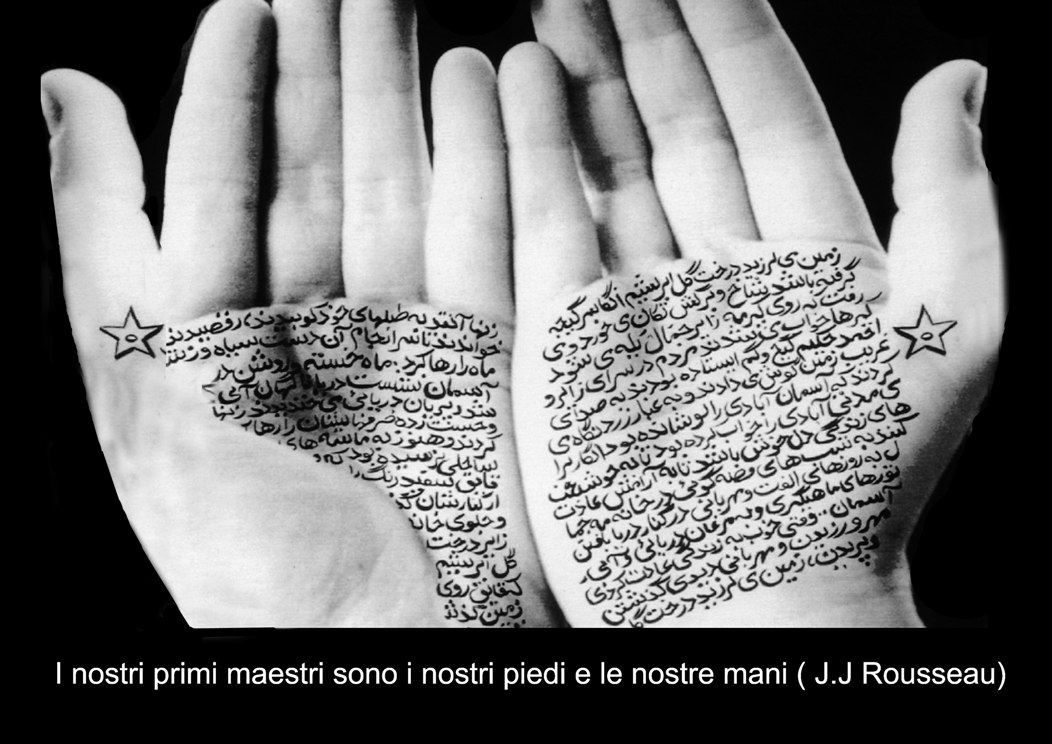
In Latin America, the Kayapò people of Northen Brazil teach through body painting, ornaments, weapons and other artifacts. The showy ornaments inserted in the pierced ears lobes have the function of enlarging them, in order to emphasize the faculty of listening
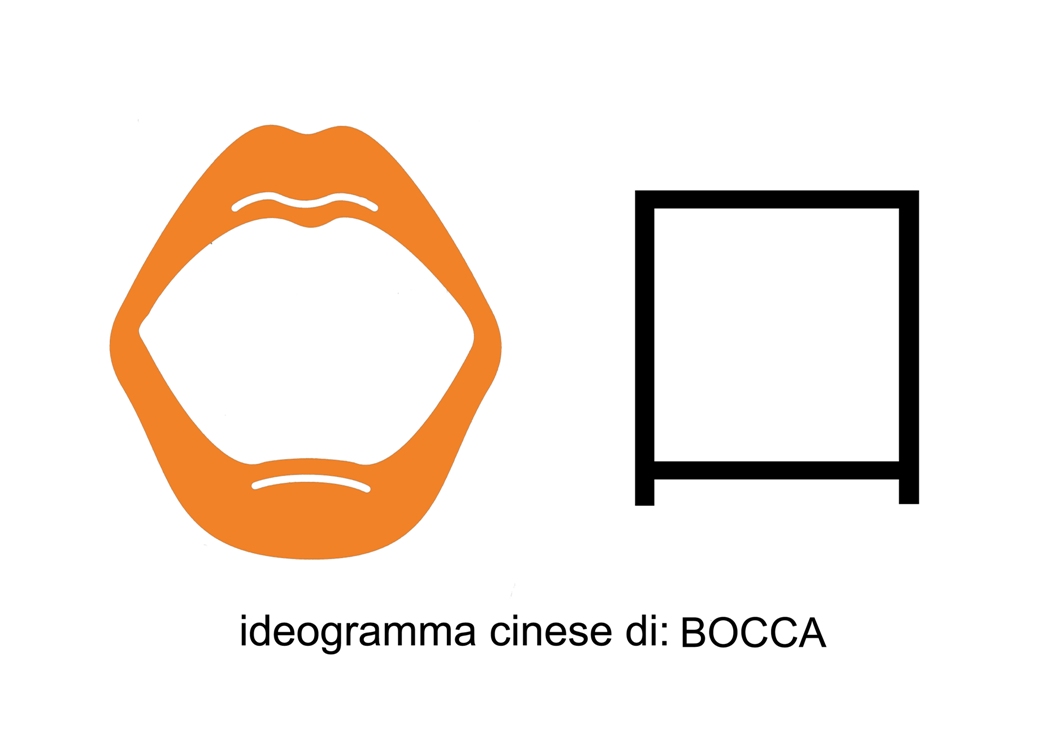
I nostri primi maestri Carattere di Bocca, Cina

Cord of Wisdom

Discover the Lega people, of the Congo, who use the “Cord of Wisdom” (Mutanga) associated with proverbs. Each object has one or more proverbs, retells a story, recalls an anecdote, to remind the youth the moral principles and wise behavior. The cord is like an open book, where children learn, think and reason on the common ideals of the village life.

Attention to Knowledge

Since ancient times, the Chinese people showed much attention to knowledge and teaching, and in this exhibit we show some exemplary stories and important figures of Chinese history.

-  The Kayapò People  -

Mereremex - To Appear Beautiful Together

The whole conceptual world of the people Kayapò (from the Amazon of Brazil) develops around a shared ideal: to be strong and beautiful , that is Mereremex .
The body painting is Mereremex .
The polychrome ornaments of the body are Mereremex .
The objects manufactured for daily use are Mereremex .
Even the ancient weapons were Mereremex .
In this perspective, the body and all their artifacts speak and express their ideal of life.

Proverbs from the World

Those who do not know the meaning of proverbs cannot speak.
Knowledge holds the whole universe, and is as powerful as the elephant's legs.
The peanut planted in the earth and cultivated well, multiplies itself.
A single wristband does not clink: alone you can't do great things; search always the collaboration of others.
Who goes to the river finds the snails; who remains in the village must be content with the shells.
Those who return from a trip, are never the same person who started the trip.
  • Visiting Hours

    The Exhibit "Culture a Confronto" is open from Tuesday to Saturday, from 9.00am to 2.00pm, for the school year.

    Tel. 0521-257.337
    mail@museocineseparma.org

  • Guided School Tours

    Your visit will be guided. The museum space is designed for groups of about 20 people (or less), so as to help appreciate and see the exhibits. The same opening hours of the Museum.
    Please call 0521-257.337.

  • Culture Telling

    Between precious ceramic vases of the Celestial Empire and feather tails of the Kayapò, people of the Amazon forest, and the knowledge and wisdom of the Lega people of, other voices and times take shape in the exhibition that recounts the ancient culture of different peoples.

Previous Exhibit

Next Exhibit
Read More

The Daring Project continues ...

The Daring Project continues ...

  • 2012 Exhibit
  • Conforti: the Daring Project continues New Museum: we tell the stories of faraway places, and we commit to know various cultures The Earth is for everyone: the rights of each human being Videos: The Daring Project and the Multi-vision on China
L'Audace Progetto continua .... al Museo d'Arte Cinese ed Etnografico, Parma

Exhibit: The Daring Project continues ...


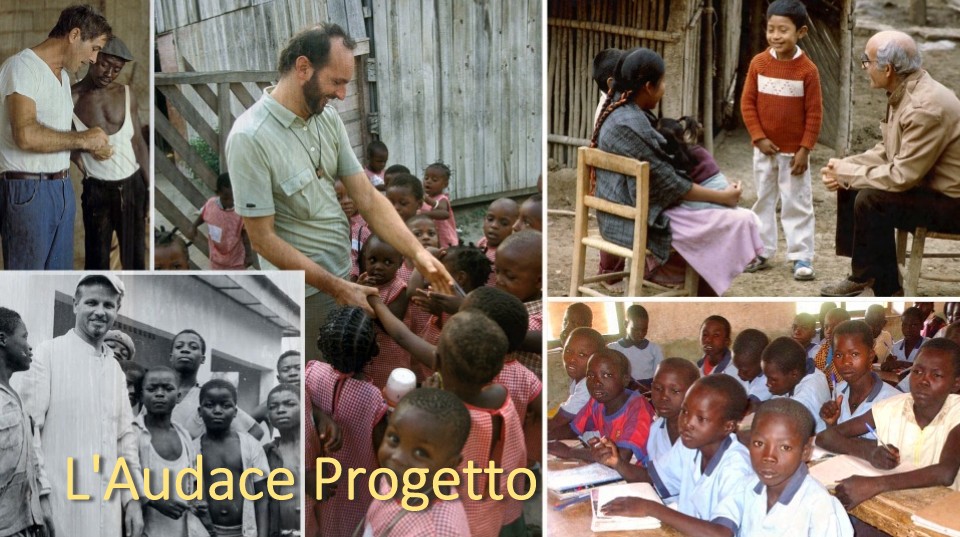
With the inauguration of the renewed museum, the Xaverian missionaries hold the exhibit entitled "The Daring Project continues ...". The museum highlights the desire to be opened to the knowledge of cultures and peoples we approached. Over the decades, the Xaverians have revealed the awe and wonder, sometimes decidedly respectful and sympathetic, other times very critical, caused by the encounter with the various cultures and civilizations.

Goal and Target

Exhibit 2012 entitled "L'Audace Progetto continua..." (The Daring Project continues ...) opens the new restructuring of the museum of the Xaverian missionaries. The exhibit wants to celebrate the origins and history of the museum and the contribution of the missionaries for the world's cultures.
Conforti is an historical figure for Parma and its province to be appreciated for his leadership as a public figure for its city and the entire world.
A teaching exhibit for schools and classes.
Vescovo Guido M. Conforti

Guido M. Conforti - Bishop of Parma

Founder of Missionaries and of a Museum

In the first rules for his future missionaries, Conforti writes: "As you come into the various territories of your missions, please send to the Mother house some cultural elements of ethnology and art."
This is the first mention of the founding of a museum. Together with the founding of the Xaverian missionaries (1895) and their mission to China (1898), it forms "the Daring Project" dreamed by Guido M. Conforti.
His greatest contribution? He was able to convince his missionaries of the cultural value of this idea, and its impact on everyone who worked in China.

Details

Missionaries and Museum

The history of the Xaverian family and the history of the museum are intertwined, and nurture each other, in order to hold both the commitment to religious education as well as to highlight elegantly the cultural artifacts of peoples. The founding of a Missionary institute and of the Museum constitute what Conforti felt as "the Daring Project."

Video - The Daring Project

A brief movie on "the Daring Project" dreamed by the founder Guido M. Conforti, which shows the Xaverian missionaries at work in the realm of culture, meeting with people, establishing contacts with realities diverse and unknown. "We are ... that intial Daring Project" for the missionaries still flesh-out the initial dream.

The Harmony of the Circle

A display of large photos with the theme of “circle-harmony”, presenting objects from various cultures represented in the museum. The circle, in fact, shows harmony and beauty across all cultures.
Video l'Audace Progetto Saveriani

The Earth is for all peoples

A series of 26 illustrated double-sided tiles with photos of the great religions, cultural expressions of the various peoples of the earth, their rights and duties as citizens of the earth: work, education, health, food, peace, etc...

Life-size silhouettes of Xaverians

The first exhibit is inspired by the origins and history of the museum. A series of life-size silhouettes of some Xaverians (the Founder and the most deserving of the fortunes of the museum), symbols of all past and present missionaries, old and young, Italians and foreigners, who over the course of more than a century believed in the daring project.

-  No barriers and no borders  -

Make of the world a Single Family

A missionary institute comes from Christ’s mandate: “Go into all the world ... proclaim the Gospel to all.” The first and natural primal religious appearance, however, merges and branches into the human and cultural commitment with ease. Thus, universality and global awareness are the DNA of a missionary institute. Conforti expressed it, then, with a very simple yet dated slogan: "Make of the world a single family." The world with no barriers and no borders.

Conforti: A Patron Saint for Museums?

The proclamation of the holiness of Msgr. Guido Conforti, on October 23, 2011, has taken on a special meaning during the restructuring of the museum. Saint Guido Conforti, in fact, was both founder of the Xaverian Missionaries, and also of the Museum. So, why the excitement for the proclamation of his holiness? Well, if someone would like to think that even museums need a patron saint, then the candidacy of Conforti would be most suitable
  • Visiting Hours

    The Exhibit "L'Audace Progetto continua ..." is open from Tuesday to Saturday, from 9.00am to 2.00pm, for the school year.

    Tel. 0521-257.337
    mail@museocineseparma.org

  • Guided School Tours

    Your visit will be guided. The museum space is designed for groups of about 20 people (or less), so as to help appreciate and see the exhibits. The same opening hours of the Museum.
    Please call 0521-257.337.

  • Multi-visione on China

    Do not miss it!
    The descent of the ramp is accompanied by images that shows ancient and current China, its arts, landscapes and people of past and present of this great nation.

Previous Exhibit

Next Exhibit

Read More